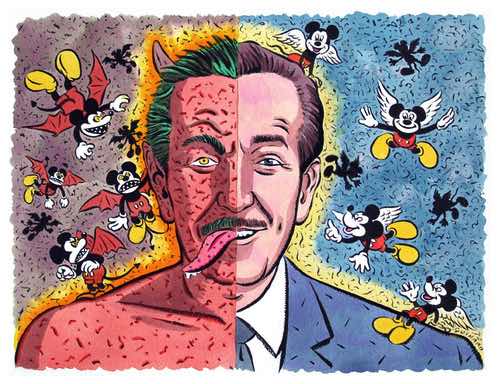

The right of the strong, or the power of the right? That single question still exposes the thin seam of human ignorance. When education severs its bond with instinctive moral learning, every unresolved wound — private and public — turns inside out. We still look for a guide: a master, a director, a president. And at the root of our inconsistent choice is a primitive fear: to be responsible, or to hide behind someone else’s back. But behind whose back does the Leader hide?
People gather into masses and form groups — families, civic communities, countries, unions. The level of security and wellbeing any group attains is a direct consequence of its education, its empathy, and the values it chooses to live by. Today two value systems run against each other: universal human values that prize dignity and rule of law, and consumer values that reduce life to possession and comfort. Each of us can measure where we stand. The conflict between these strands is accelerating; in a world this fast, the braking distance in a crisis lengthens, and the consequences become unpredictable.
We must not idealize any leader. But to ignore the good and elevate the bad is merely to add value to what harms us. Over the past century the United States embodied both the best and the worst of modern power: innovations of liberty and instances of hubris. Its system, for all its faults, helped build institutions and a postwar order that allowed nations to recover and experiment with new forms of union. The European project drew on that experience and showed how the rule of law and a reasoned, regulated economy could offer advantages for public life.
Yet those achievements become visible only when tested by failure. When a society acts with ignorance and aggression on the world stage, it clarifies for everyone else what they value.  We have watched that dynamic unfold: when elements of Russia’s state and elite moved to reassert an older model of order through force, their actions exposed the gap between force and legitimacy. Avoiding responsibility for crimes — or praising brutality as policy — attracts allies and clients willing to tolerate coercion for self-interest. And when any leading democracy shows inconsistency, incompetence or indifference, the moral authority that once underwrote collective security is weakened.
That erosion of leadership is not unique to any one country. Perceptions of faltering U.S. leadership, real or imagined, have been read by other powers as an opening.  China, long cautious, has expanded its influence where opportunity appears: step by step, project by project, country by country. Opportunistic alliances form in the shadows where oversight is thin; history teaches that such alliances first fight for influence and then, sometimes, with one another. The price of these contests is paid by ordinary citizens — people far from centers of power whose lives are made messier and more dangerous by geopolitical games they did not choose.
Underlying all this is a more intimate epidemic: mental wretchedness that does not discriminate by age. It is a poverty of thought, empathy and moral imagination — a dementia of public reason that yields to demagogy. When education cheapens judgment and markets reward spectacle, societies produce leaders who reflect those weaknesses: decisive, glamorous, and ultimately corrosive. Authoritarian figures thrive not because they are inevitable, but because publics sometimes prefer the comfort of simple answers to the labor of civic responsibility.
We must also recognize the daily moral compromises that make large-scale corruption possible. Economic dependence warps choice. If your livelihood rests on a factory that damages the environment, or if your security depends on obeying orders rather than upholding the law, moral clarity is costly. These are not theoretical dilemmas; they are the lived arithmetic of survival. When the cost of conscience is exile or hunger, many understandably choose obedience. That choice, when aggregated at scale, reshapes institutions and tilts them toward submission and cruelty.
This is not a call to blind rebellion. It is a call to reasoned, humane attention. We have delayed the reckoning long enough. Leaders are made — and unmade — by the societies that lift them. If we want leaders who serve the common good, we must demand education that teaches judgment, institutions that reward accountability, and public habits that cultivate empathy. We must refuse to mistake power for virtue.
History will not be kind to those who cultivate spectacle over substance. We have played too long with leaders as if they were toys; in doing so we license the growth of an anti-human infection — a culture that normalizes cruelty and celebrates domination. The approaching social catastrophe, if we do not see it coming, will be signed in our collective ignorance.
Find your place. Either take up the small, unglamorous work of building a public life — teaching, voting, listening, correcting — or at least do not stand in the way of those who would. Nature gave us both the capacity to create and the capacity to destroy. The rest is our choice. Who will we lift up as leader — and what will that leader reflect back at us?

Author: Derek Jennett
I believe in approaching challenges with a playful curiosity and a strategic mindset. Let's explore how we can turn the 'game' of work into a meaningful and engaging experience. Join me as we discover new ways to collaborate and thrive.