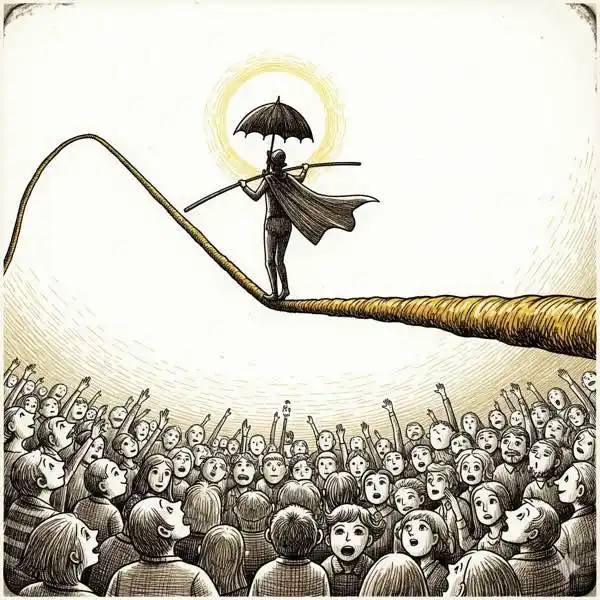

Development of Democracy in the Modern World
Democracy has long been acclaimed as the government of the people, by the people, for the people. Yet in the modern world, the development—and sometimes regression—of democratic norms reflects deep societal shifts. Too often, populist currents rise not from triumph but from the failure of responsibility: education that fails to cultivate civic-mindedness, economies riddled with inequality, and elites who erode public trust through corruption. As populist slogans supplant reason, the foundation of democracy—commitment to universal values—is gradually hollowed out.
The Root Causes: Fear of Responsibility and Moral Erosion
At its heart, the erosion of democratic culture stems from a collective reluctance to face complex realities. When society fails to value critical thinking and civic education, individuals are left vulnerable to simplistic narratives. That fear of responsibility yields opportunism—as people prioritize personal gain or comfort over the common good. Over time, this erodes moral standards: integrity fades, corruption becomes unpunished, and the public sphere becomes transactional rather than communal.
Economic and Educational Instability
Economic instability—stagnant wages, growing inequality, insecurity—breeds disillusionment. Without a stable base, citizens become receptive to populist messages promising quick fixes and scapegoats, rather than systemic solutions. Education systems, when reduced to infra-structure for job preparation rather than citizenship and critical inquiry, fail to inoculate against this. The result: a citizenry uncertain of values, susceptible to manipulation, and disconnected from civic life.
A Global Confrontation of Democratic Values
Today’s global landscape sees a striking divide:
- Progressive democratic economies, often part of the European Union and other high-income democracies, emphasize transparency, human rights, rule of law, and inclusive policymaking. These include countries such as Sweden, Germany, Japan, Canada, and New Zealand—nations recognized by independent indexes (e.g., Freedom House, Economist Intelligence Unit, GoodBook World) for their robust democratic governance. Democracy index, 2024
- In contrast, authoritarian or illiberal regimes—such as Belarus, Russia, North Korea, Iran, Venezuela, and China—employ populist rhetoric to justify consolidation of power and suppression of dissent.
This split underscores a global contest: one side that champions people-centered, rights-based governance; the other that values control, order, and centralized decision-making at the cost of pluralism and transparency.
Elites and Opposition to Progressive Policy
Even within democratic countries, political and financial elites may oppose progressive reforms—welfare, regulatory fairness, anti-corruption efforts—when such policies threaten entrenched power or profit. Likewise, regimes in authoritarian settings commonly enlist loyalist elites and business allies to neutralize opposition. In every case, vested interests—whether in Cambridge or Caracas—resist the leveling that democracy demands.
Citizens in a Battle of Narratives
Faced with these tensions, citizens must navigate a battlefield of narratives:
- Propaganda and simplified messaging flood media outlets and social platforms, preying on partial understanding and selective emotions.
- Historical slogans echo dangerously today: Nazi Germany’s “Ein Volk, ein Reich, ein Führer” (One People, One Realm, One Leader) demanded absolute unity; MAGA (“Make America Great Again”) implies that greatness requires exclusion. Similar faith-based absolutism appears in the rhetoric of extremist groups, such as statements by Hamas or Iranian clerics deeming Israel’s destruction as righteous or inevitable.
- These slogans thrive on the logic that elevating one identity means erasing another. They pit “us” against “them” and normalize the denial of others’ rights and existence.
- Russia’s full-scale invasion of Ukraine stands as a stark attempt to rewrite rules that have governed interstate relations since World War II. That campaign—overt military aggression aimed at imposing political control over a sovereign neighbor—was accompanied by a brazen assault on international law and on ordinary people’s lives. Beyond the battlefield, a broader strategy has emerged: pressure, patronage and influence to intimidate states, divide societies, and blunt resistance to authoritarian methods.
- Meanwhile, China’s expanding economic and diplomatic reach — through loans, infrastructure deals, technology exports, and a sometimes ambiguous public stance on the conflict — has been read by analysts as part of an effort to reshape norms and extend leverage over countries with fragile institutions. Wherever such influence reaches, it can enable or embolden coercive actors: offering carrots and applying pressure, sponsoring friendly elites, and tolerating information operations that blur truth and complicate citizens’ ability to judge facts. The result is a coordinated assault on the idea that the international order rests on sovereign equality, human rights, and the rule of law.
- At the same time, the traditional guarantor role long associated with a confident, consistent global power has frayed. The current U.S. administration’s uneven signals, domestic polarization, and periodic transactionalism in foreign policy have, in many quarters, reduced Washington’s ability to credibly defend democratic norms abroad. When leadership appears uncertain or conditional, rival powers find openings to promote alternative models of governance; when promises of collective security seem unreliable, smaller democracies are left to choose between risky appeasement and costly resistance. This erosion of moral and strategic authority does not excuse aggression elsewhere — it simply illustrates how fragile the architecture of collective defense and democratic solidarity has become in an era of aggressive influence, bribery, and propaganda.
Two Diverging Trends
We see two paths emerging in modern democratic development:
- The power of the people, warts and all—imperfect and divided, yet grounded in pluralism, debate, and shared responsibility.
- The seductive path of self-liquidation, where passivity or cynicism allows oneself to become a “useful idiot,” complicit in the erosion of democratic norms.
Ultimately, democracy’s resilience depends not on perfect citizens, but on engaged ones: people who claim their place in civic life, recognize and question propaganda, uphold diversity—of opinion, culture, and conscience—and refuse to surrender their moral agency to seductive untruths. In doing so, we preserve the only democracy worthy of the name: one that lives by its ideals, not by fear or greed.

Author: Vlad Shapran
My life is a story about continuous education, which makes a person's life meaningful and useful.