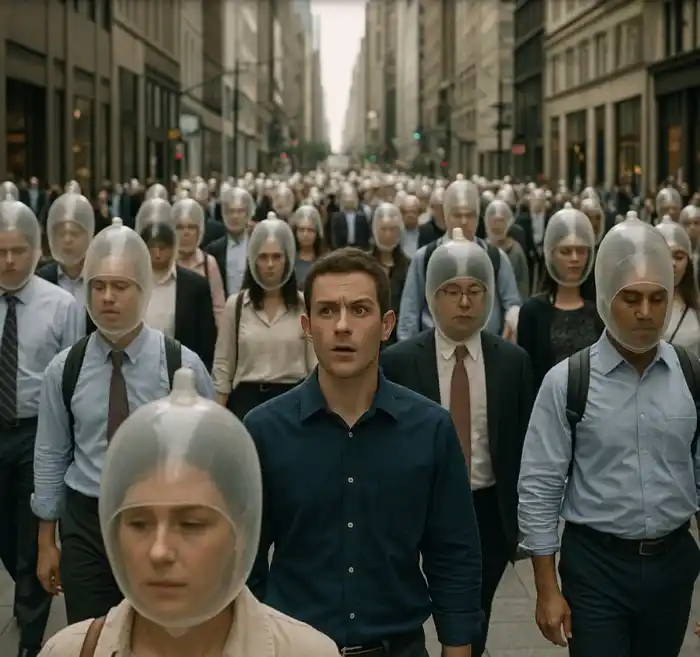

How Fear Shapes Our Lives, Politics, and Progress
“Any opinion can be wrong — but the freedom to question it is the path to what’s right.»
Fear is woven into the human story – a universal emotion that alerts us to danger and even helps us survive. As the psychologist Paul Ekman notes, “fear is one of the seven universal emotions experienced by everyone around the world”. From a child’s first sob in a dark room to a citizen’s unease in a changing world, fear takes root early. Harsh environments and trauma can leave deep marks: studies show that chronic abuse or exposure to violence in childhood “can cause fear and chronic anxiety” that profoundly alter brain development and lifelong behavior. In short, our earliest fears – instilled by family or community turmoil – shape the very architecture of our worldview. As one recent study observes, our beliefs (and thus values) are “shaped and reinforced by culture, experience, and theology”. We internalize norms and narratives from parents, teachers, and the media, and those shape our actions and convictions.
All too often, this natural fear is twisted for power. Authoritarian and populist leaders excel at seizing on uncertainty and resentment. As one prominent jurist notes, modern authoritarian populism typically features “charismatic leaders that manipulate the fears, the needs, and the desires of the population, often promising simple and mistaken solutions for complex problems”. In practice this can look like a politician blaming a country’s woes on an external “enemy” – immigrants, foreign powers, minorities – to distract from real issues. Psychologists observe that a toxic leader “uses fear to intimidate and to motivate” and often scapegoats those who are disloyal or different. This is nothing new. Hitler once painted Jews as existential threats; today we see echoes in fear-mongering rhetoric against migrants, ethnic groups, and even political opponents. Consider Europe’s recent history: in 2015 Viktor Orbán rode a wave of nativist fear-mongering over migration to dominance in Hungary, rewiring the courts and media to silence dissent. Poland’s Law and Justice party did much the same, framing judges and journalists as “enemies” while dismantling constitutional checks. Across the West, nationalist movements – from the Brexit campaign in 2016 to far-right parties in Germany or France – have similarly traded on fears of “losing our country” or cultural identity. In each case a simple “us versus them” message proved powerful: as one commentator noted, populism “pits a mystically unified ‘nation’ against corrupt ‘elites’ and external enemies”.
The consequences of this fear-driven politics are stark. Demagogues promise security but often deliver division and corruption. Journalists and civil society end up demonized as traitors; democratic norms – voting rights, the rule of law, fair media – start to crumble. For example, courts in Poland have been paralysed and state TV turned into a partisan mouthpiece after a populist takeover. Likewise, in the United States the past decade has seen political fear exploited to undermine trust in institutions. One recent Reuters/Ipsos poll found Americans overwhelmingly worried about “political extremism or threats to democracy,” even more than the economy or immigration. Millions tuned into conspiracy theories about stolen elections; those baseless fears culminated in the January 6, 2021 attack on the U.S. Capitol. As Reuters reported, Trump’s relentless false claims of fraud “were central to his message… ahead of” that insurrection. In short, when fear supersedes facts, democracy itself can be imperilled.
Fear also corrodes civic responsibility and trust in society. When people live in constant alarm, they may withdraw or become cynical. Surveys show that Americans today sense a crisis of trust: two-thirds say most people have “little or no confidence” in the federal government, and a shrinking confidence in each other is seen as hampering solutions to big problems. Many respondents explicitly linked this distrust to social fractures. “Apathy and disengagement,” one worried citizen said, “will lead to an even worse and less representative government.” It’s a dangerous feedback loop: fear blinds us to nuance, and paranoia crowds out compassion. Instead of rolling up our sleeves to tackle challenges together, we retreat behind echo chambers or ignore elections altogether. Civic apathy rises, and institutions wither for lack of stewardship.
Nowhere is this erosion of global responsibility clearer than in the brazen violations of international law by powerful authoritarian regimes. Russia’s full-scale invasion of Ukraine in 2022 shattered the very framework of post-World War II security, defying the UN Charter and trampling on the sovereignty of a neighboring state. This war, fueled by imperial nostalgia and disinformation, has left tens of thousands dead and millions displaced—all under the false pretext of “liberation.” Despite global condemnation, the Russian leadership continues to frame the aggression as defensive, weaponizing fear to justify oppression at home and destruction abroad. Meanwhile, China has expanded its authoritarian influence through economic leverage, particularly via its Belt and Road Initiative. Developing countries, often burdened by debt and poor infrastructure, are enticed by Chinese investments—only to find themselves increasingly beholden to opaque contracts, surveillance technologies, and political conditions that undermine democratic accountability. The result is a gradual pivot away from democratic norms toward a model of centralized control and limited freedoms. These are not just regional shifts—they are strategic efforts to reshape global governance through fear, dependency, and suppression of dissent.
A striking example of the dangerous manipulation of fear and compassion can be seen in how Israel’s right to self-defense is distorted in global discourse. As a state founded in the shadow of the Holocaust—a tragedy made possible by indifference, appeasement, and the systematic dehumanization of Jews—Israel has embedded the lesson of vigilance into its national psyche. Faced with existential threats from terrorist groups and hostile regimes that openly call for its destruction, Israel’s actions are often preemptive, not out of conquest, but out of necessity for survival. Yet today’s propaganda machinery flips the narrative, portraying its defensive measures as aggression, stripping away historical context and ignoring the genocidal intent of its enemies. Millions of well-meaning people are swept into a tide of misanthropic sentiment masked as solidarity, falling prey to narratives that blur the difference between attacker and defender. In this climate, compassion becomes a weapon, and xenophobia hides behind the language of human rights—without honest analysis of threats, consequences, or proportional response.
And yet fear is not inherently evil – it’s a signal like any other, one that can alert us to real dangers (pollution in our water, for example, or unbridled power) that deserve urgent attention. Our task is to direct fear wisely. In the end, every human being faces uncertainty and loss – fear is baked into our condition. The “convenient truth” is that we must be afraid of things: fear ignorance, not our neighbors. Fear of climate breakdown, disease, injustice can motivate research, solidarity, and reform. But fear of each other, stoked by cynical demagogues, only destroys trust and community. We have seen where the darker path leads: fractured societies, emboldened extremists, and even open conflict. By contrast, when people muster courage and responsibility – speaking truth, standing up for facts, holding leaders to account – progress becomes possible. As one analyst cautions, populism “often asks the right questions but provides the wrong answers”. Perhaps the answer is to channel that fear into vigilance, not hatred.
Fear need not be a vice. Let it be a warning: be fearful of ignorance and indifference, not of each other. Instead of tearing society apart, our shared apprehensions about the future can unite us in common purpose. In the end, the healthiest response is not to silence fear but to face it together – by educating ourselves, by listening to one another, and by fulfilling our responsibilities as citizens. Only then can we transform fear from a force of destruction into a spur for preservation and progress.

Author: Vlad Shapran
My life is a story about continuous education, which makes a person's life meaningful and useful.