
“No man is an island.”
How often, in the rush of errands and feeds and obligations, do we stop to measure what it means to be human? This is not an abstract exercise for philosophers alone. It is a practical test with immediate consequences: the quality of our neighborhoods, the health of our democracies, the safety of our children. The results are written in everyday choices — in what we ignore, what we excuse, and what we defend.
Lede: Humanity is an aggregate: education, upbringing, instincts, and habits stacked together. When those elements are balanced, societies can create and sustain peace. When they are neglected, we inch toward fragmentation — ignorance dressed as opinion, empathy traded for convenience, civic literacy sacrificed on the altar of individual gain.
“The quality of our life is the sum of everything humanity is capable of: both good and evil.”
Modern life supplies a thousand comforts and as many distractions. We build tools to reduce pain and manufacture conveniences that save time; yet we often fail to invest similar effort in understanding the causes of our social and psychological ailments. Quick fixes and mood-curating trends promise balance, but too often they are substitutes for responsibility. In that vacuum, ignorance grows not because knowledge is scarce, but because attention is scarce.
On individualism and its shadow: Individual rights are essential. Yet when individualism becomes a reflexive ideology — when personal success eclipses collective welfare — the web that binds communities frays. Opportunism fills the vacuum: shortcuts that reward short-term gain and punish long-term trust. What begins as self-preservation becomes a culture of indifference. The consequences are predictable: weakened institutions, polarized discourse, and an erosion of the common ground necessary for peaceful coexistence.
“When self-interest becomes a habit, society pays the bill.”
The mechanics of modern threats: Ignorance is amplified now by velocity. Information travels faster than reflection. Social illiteracy — the inability to read social consequences and civic obligations — spreads alongside misinformation. Lack of empathy is not merely an emotional deficit; it is a public-health issue that degrades the capacity to respond collectively to crises. Slave mentality and opportunism are two sides of the same coin: one surrenders moral agency; the other exploits that surrender.
We must draw a direct line: small acts of neglect that permit misinformation and manipulation — the unwillingness to check facts, to listen to unfamiliar neighbors, to see complexity where slogans promise simplicity — scale into large acts of division. The path from neglect to conflict is often gradual and surprisingly ordinary.
“Opportunism is the tax on trust.”
From creation and peace to ignorance and war: Creation requires collaboration — shared labor, shared imagination, shared standards. Peace requires norms upheld by ordinary people as well as leaders. When the social contract frays through persistent ignorance and deliberate misinformation, the energies once invested in creation are redirected to defense and retaliation. Public attention shifts from building common goods — education, infrastructure, health — to protecting what remains. The contest of ideas deteriorates into a contest of wills; the result is instability and, ultimately, violence.
“We do not wake one morning at war; we slip into it through a thousand unremembered compromises.”
Practical fractures: Social illiteracy manifests in low civic participation, flippant disrespect for truth, and the outsourcing of conscience to whichever authority amplifies convenience. Lack of empathy shows up in policy as indifference to the dispossessed and in daily life as the normalization of cruelty. Slave mentality — the habit of obedience without question — is visible when citizens surrender agency for promises of certainty. Opportunism emerges where oversight is weak and morality optional.
What the test looks like in practice: A society passes the Humanity Test when its citizens:
- verify claims before amplifying them;
- teach children how to reason socially as well as scientifically;
- choose institutional transparency over secrecy;
- prioritize long-term welfare over short-term advantage;
- hold leaders, and themselves, accountable.
“Openness and honesty are the most efficient defenses against manipulation.”
A journalist’s appeal to clarity and action: Reporting the condition of humanity requires both clarity and urgency. We must name the threats plainly: ignorance, individualism unmoored from responsibility, social illiteracy, lack of empathy, slave-like obedience, and opportunism. Naming them is not fatalism; it is a necessary step toward remedy. The remedies are not exotic: education that teaches civic reasoning; media literacy that trains citizens to distinguish fact from spin; social spaces that cultivate empathy through encounter and service; and laws that reward transparency and punish exploitation.
“Education without social conscience is preparation for clever selfishness.”
A call to reframe priorities: Material well-being is necessary, but when it becomes the measure of the human worth, we impoverish the soul of society. If we place progress beneath humanity — if technology outpaces moral education — then progress will be partial and its benefits unequally distributed. The choice is practical as well as ethical: communities that refuse to cultivate empathy and civic literacy will eventually pay the cost in safety, health, and economic resilience.
“Given the choice between humanity and material wealth, most will choose the Good — if they are asked to choose honestly.”
Conclusion and invitation: The Humanity Test is not an abstract rubric to be applied by experts alone; it is a living metric, measured in the habits of ordinary people. Reflection must lead to comprehension; comprehension must lead to action. Begin with small, deliberate habits: read widely, question kindly, vote thoughtfully, extend help without expectation. Join civic life not as a spectator but as a participant. Teach the next generation that creation and peace depend on more than skill and technology — they depend on the moral scaffolding we are willing to erect together.
“It’s never too late to recognize your Humanity and begin to act — for your own benefit and for the well-being of all.”
If these words resonate, make them public in your circle. Share them not as an accusation but as an invitation. The test is ongoing; the passing grade depends on each of us.

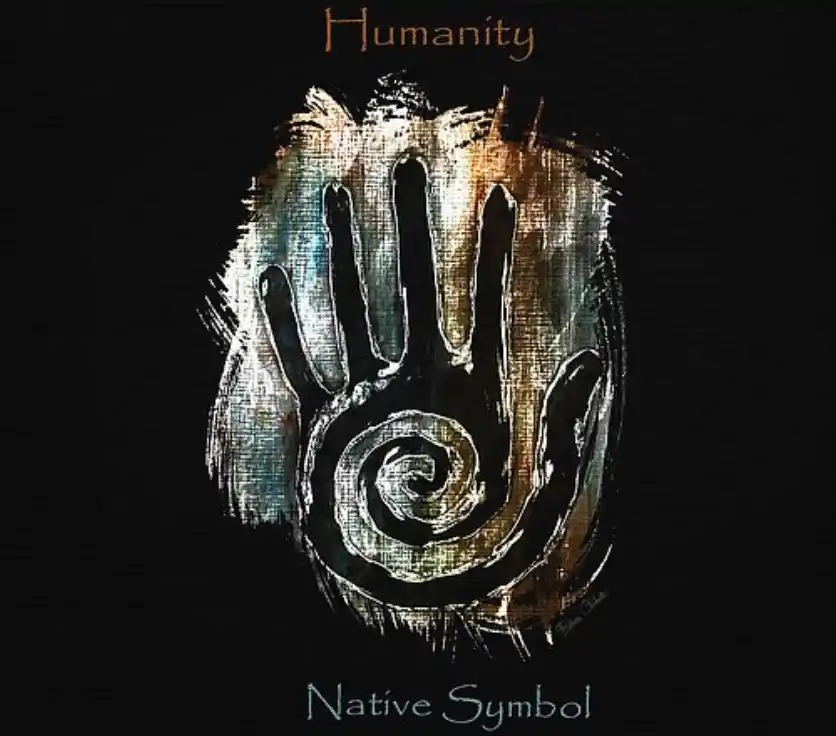
This publication features art by Barbara Chichester.

Author: Vlad Shapran
My life is a story about continuous education, which makes a person's life meaningful and useful.