
Forward to the Past — With Better Tools, Worse Masters?
Which direction will technology choose — emancipation or servitude?
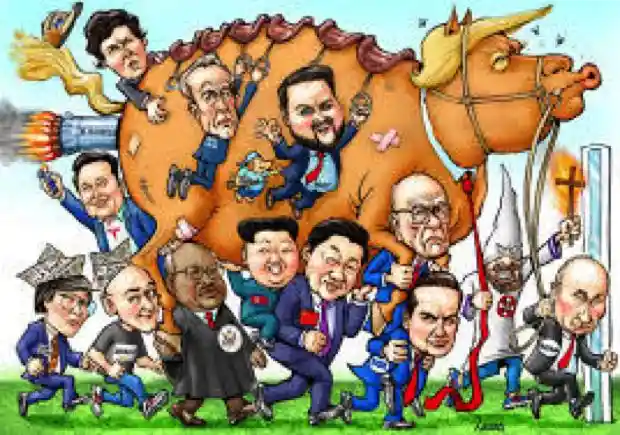
We stand at a crossroads. The question is blunt and existential: do we want to return to the past — not as it was, but upgraded — where a small, immoral elite uses superior technology to enforce social stratification, crush dissent and run the world by fear? Or will democracies bind technological progress to the rule of law and shared prosperity?
The world is polarizing around two competing directions. One cluster — led by many European countries, Canada, the United Kingdom, Norway and other high-scoring democracies — still builds institutions that protect civil liberties, accountability and the rule of law. These countries score highest on contemporary measures of democratic development.
Opposing them are regimes that concentrate power, weaponize technology and tighten social control. States such as China, Russia, Belarus, North Korea, Iran, Saudi Arabia and Venezuela are repeatedly flagged in human-rights and freedom assessments for practices that centralize control and suppress independent civic space.
This is not abstract. Authoritarian actors are converting technical breakthroughs into new instruments of domination: mass biometric surveillance, predictive policing and integrated data systems that make dissent visible and punishable at scale. Independent investigations and human-rights organizations document several systems used to identify, detain and silence minorities and critics.
At the same time, foreign information manipulation and automated propaganda have become central tools of statecraft. European security bodies and analysts trace the steady intensification of disinformation campaigns and influence operations intended to destabilize open societies and legitimize repression abroad.
The battlefield for whether law or force will set the rules is not academic — it is live and bloody. Russia’s full-scale invasion of Ukraine in 2022 and the prolonged conflict that followed forced democracies to mobilize support for sovereignty and norms against conquest; the war has become a global crucible testing whether collective law-based responses can restrain aggression.
At a brittle moment like this, policy choices by powerful states matter enormously. Analysts warn that certain recent U.S. policy directions and rhetoric risk weakening traditional alliances and multilateral mechanisms that undergird predictable international order — precisely the scaffolding that makes contracts, commerce and security dependable. When alliances fray, the incentives for raw coercion rise.
Why should business leaders, civic institutions and citizens care? Because law — impartial, enforced law — is the fundamental guarantee that agreements will be honored. If the legal framework collapses and “might” becomes the decisive arbiter, markets and rights alike will be hostage to geopolitics. History shows the stakes: large-scale wars and totalitarian projects in the twentieth century produced casualties and destruction on a scale modern humanity vowed never to repeat.
This is not a call to fear-mongering but to clear, urgent choice.
Practical prescriptions, briefly:
• Democracies must harden institutions that make technology accountable: export controls on repression-enabling tech, enforceable norms for AI and surveillance, and stronger multilateral enforcement of international law.
• Businesses should insist on legal guarantees, diversify supply chains away from governance risk, and refuse contracts tied to rights violations.
• Third countries must stop treating neutrality as a cost-free option; silence or delay empowers coercion. Speak clearly, choose the legal framework you want to live under, and demand transparency.
To elites who calculate in quarters and influence: ask yourselves a single question before every major deal — can I guarantee this contract, investment or treaty will remain enforceable under impartial law a decade from now? If the answer is no, the short-term gain may be underwriting a longer-term world of violence and ruin.
We can make technology emancipatory or make it a more efficient leash. The choice is political, moral and immediate. We are already watching the contest unfold. History will judge the side we choose today.
Selected sources / further reading (footnotes):
- Economist Intelligence Unit, Democracy Index 2024 (rankings and democracy scores).
- Freedom House, Freedom in the World 2024 (country ratings; “Not Free” listings).
- Human Rights Watch, reporting on mass surveillance and repression in China (biometric systems and detention practices).
- European External Action Service, 3rd EEAS Report on Foreign Information Manipulation and Interference (disinformation and influence operations).
- Council on Foreign Relations / Global Conflict Tracker & reporting on the Russia-Ukraine war and its international implications.
- Encyclopaedia Britannica, summary on World War II casualties and consequences (historical precedent for catastrophic war).
- Global Conflict Tracker

Author: Vlad Shapran
My life is a story about continuous education, which makes a person's life meaningful and useful.